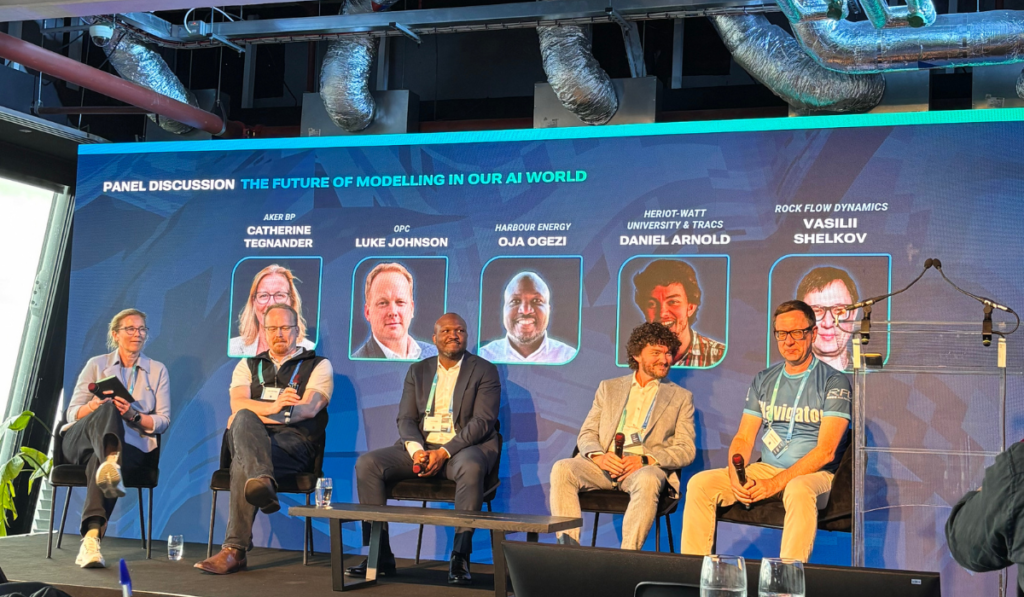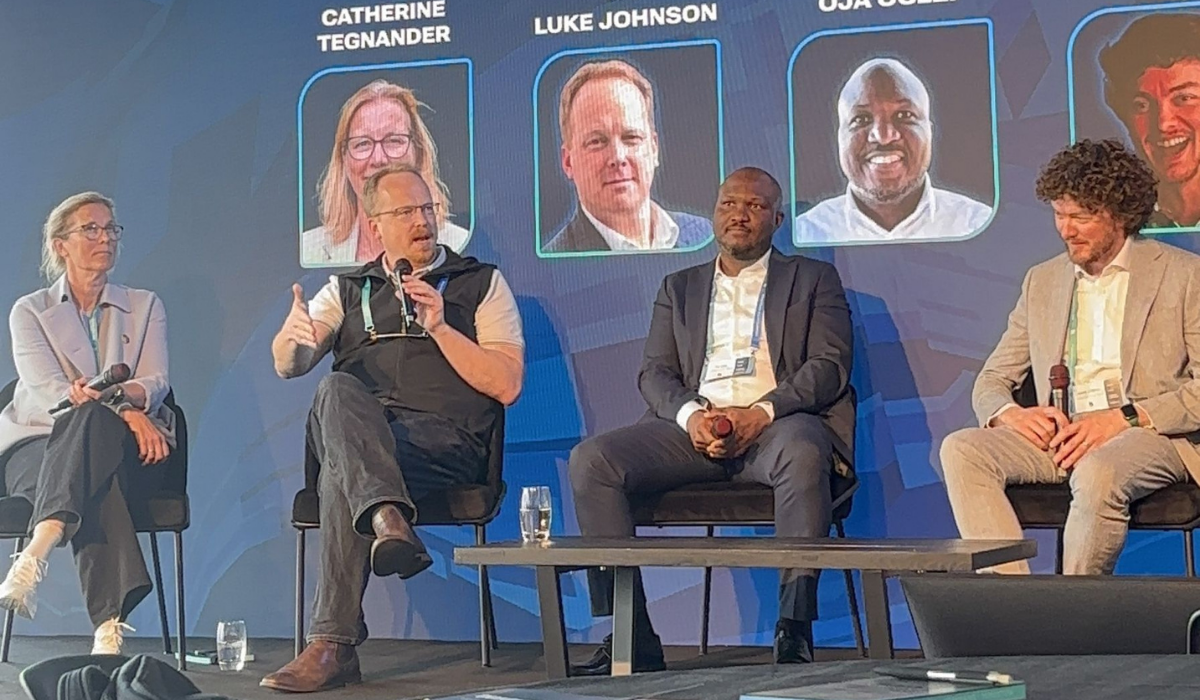
Subsurface Director Luke Johnson joined a panel at the Rock Flow Dynamics tNavigator Technology Summit to discuss how artificial intelligence is reshaping geological and engineering modelling, and why the future of the profession may depend more on expertise and judgement than ever before.
The annual summit brought together geoscientists, reservoir engineers and technology specialists to explore the latest developments in reservoir modelling, simulation and AI-enabled workflows.
One question sat at the centre of the discussion:
What does AI mean for the future of geological modelling?
For Luke, the answer is clear.
This is not the death of geomodelling. It could be the rebirth of the geologist.
AI Changes How We Work.
While AI is transforming the way subsurface teams work, Luke argued that it does not fundamentally reduce uncertainty within geological or engineering data. The subsurface remains complex, data remains incomplete, and interpretation remains essential.
Instead, AI changes how professionals interact with that uncertainty.
By automating repetitive tasks and accelerating modelling workflows, AI frees geoscientists and engineers to focus more of their time on interpretation, hypothesis testing and decision-making.
As Luke explained during the discussion:
"AI doesn't reduce the uncertainty in your data. It changes how you work with it."
Expertise Still Matters.
A key theme throughout the panel was the distinction between tools and expertise.
The value of a geologist has never been their ability to operate a particular software package. Their value lies in understanding geological processes, integrating multiple sources of evidence and judging where an interpretation sits within the range of possible realities.
AI has the potential to accelerate the delivery of that knowledge, but the responsibility for interpretation and decision-making remains firmly with the geologist.
The Future of Geological Modelling.
Rather than replacing expertise, AI may allow geoscientists and engineers to spend more time applying it where it matters most.
As AI adoption continues to grow across the energy sector, those who combine technical expertise, critical thinking and sound judgement with the capabilities AI provides will be best placed to unlock its value.
Technology may accelerate the process. The geologist still owns the judgement.
OPC would like to thank fellow panellists Cathrine Tegnander, Oja Ogezi, Daniel Arnold and Vasilii Shelkov, along with the Rock Flow Dynamics team, for an engaging discussion on the future of subsurface technology and the evolving role of AI in geological and engineering workflows.