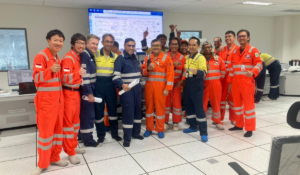
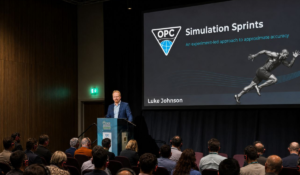
Riley Smith, Chief Operating Officer & Managing Director of OPC, spent two weeks developing the expansion plans with John Hoffman, Managing Director of OPC APAC.
Here Riley provides more details about this exciting development:
Why did OPC acquire OPES and what are the advantages to customers?
We recognised the synergies between OPC and OPES, now OPC APAC. We saw an opportunity to add to our extensive global resource base with several top tier experts and importantly inherit an impressive track record in the provision of petroleum and reservoir engineering within the APAC market.
Now we have added the full suite of OPC services to our APAC offering giving existing and new APAC clients access to a broader and deeper range of expertise.
What is the advantage of the broader range of expertise?
The biggest advantage is giving clients across the region access to our global experience. OPC has built up its capability and experience over 35 years, there isn’t much we haven’t seen from an upstream E&P perspective. The APAC region has a strong focus on gas, which also plays well to our global capability, here we will bring our experience from other major gas hubs like Qatar.
Are there any industry challenges based on your meetings with clients during this trip?
I have heard from several clients that the APAC market has a real shortage of top-tier technical resources. This is certainly a challenge that we are well placed to address. OPC not only has its seven global offices with expert technical teams that are available to clients on demand, but we also have over 4,000 technically qualified consultants available to be deployed globally. We’ve been doing it for 35 years. So, we hope to help clients address that skills gap in the APAC market.
How can you help APAC companies to build their local talent?
The training and development of local in-country technical experts is something that we have been actively delivering for more than 20 years, mostly to NOC clients in the Middle East. I see a lot of opportunities for these services across SE Asia where there is a real appetite to upskill the local workforce and a drive to rely less on international resources to deliver projects. We have a dedicated pool of training specialists with course content ready to go and look forward to supporting operators in the region on these requirements.
What demand do you expect from the APAC region?
There is an obvious focus on natural gas development to meet the region’s growing gas demands, I hope to see growth in what we are already offering the Australian market but in addition we plan to use our presence here as a springboard into SE Asia where we see significant demand for technical expertise.
In Australia specifically, government regulations are driving an increase in CCS activity linked to energy developments, with our combined capability of domestic and international experience, I expect there will be a demand for expertise in this area too.
What countries can OPC support in Asia?
Everywhere! We obviously have significant experience in Australia having worked on numerous projects in the country. With our expanded presence we now have a significant combined track record in Asia including executing studies on fields in Indonesia, PNG, India, Pakistan, Vietnam, Philippines and Thailand. We have also developed strategic partnerships in some of these countries allowing us to deploy our services and meet local content rules.
Is there a market for energy transition services in APAC?
Absolutely. As I already mentioned CCS is on everyone’s agenda as part of most development plans and our Perth team have already supported a number of the major CCS projects in Western Australia. Next for us is deploying our CCS capability in SE Asia!